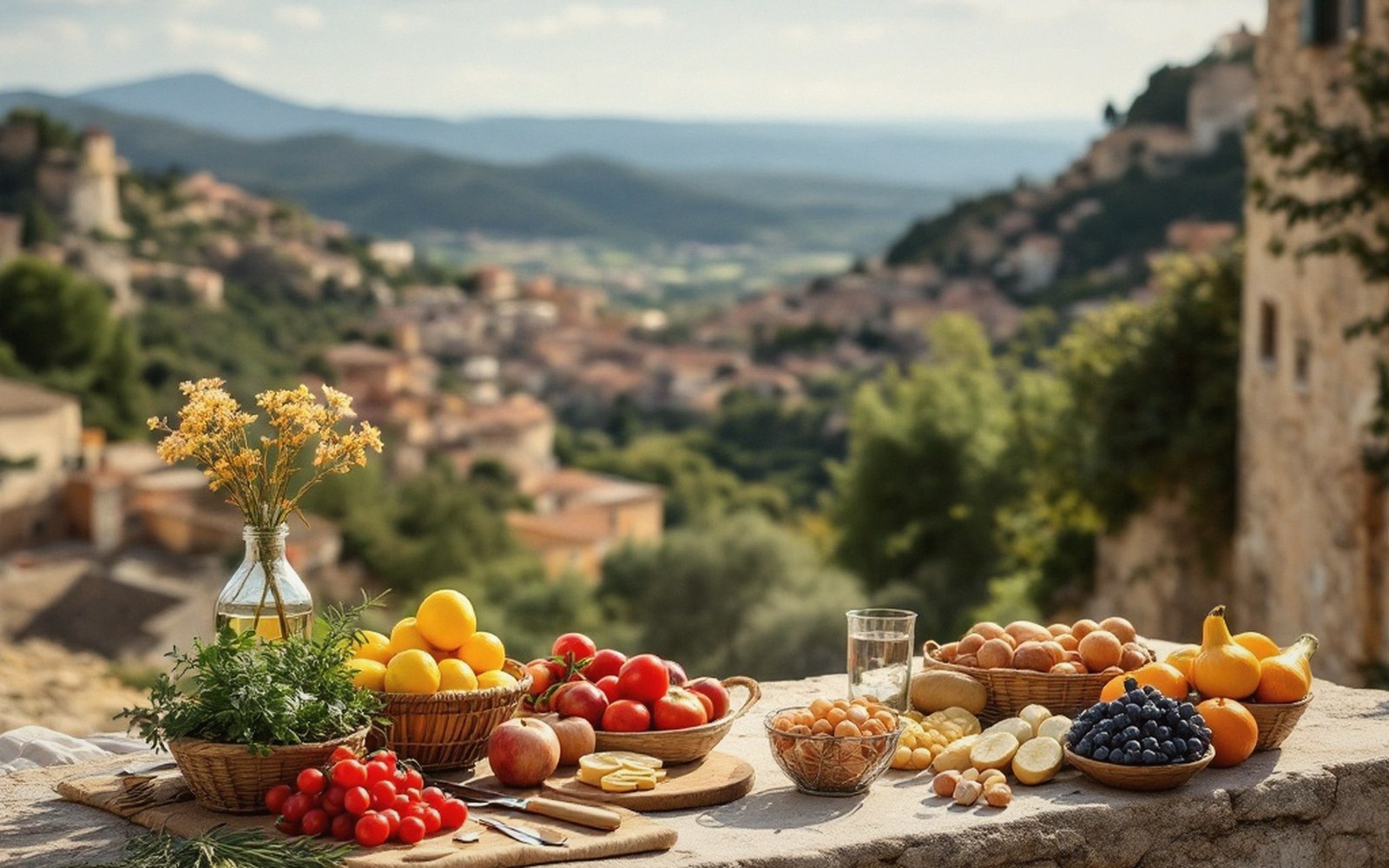
The valley between the massif and the Vaucluse plateau is not scenic in any obvious way, but it is the reason the Luberon is liveable.
The Corridor
The Calavon — also called the Coulon for much of its lower course — is not a dramatic river. For most of the year it runs low and brown through a wide, flat-bottomed valley between the northern flank of the Luberon and the white limestone scarps of the Vaucluse plateau. There is nothing alpine about it. But the valley it carved is the single most useful piece of geography in the massif, and the N100 that follows it has been carrying traffic between Apt and Cavaillon for longer than anyone has been counting.
The road runs roughly east–west, connecting Apt in the upper valley to Cavaillon at the confluence with the Durance plain, with Coustellet, Robion and Cheval-Blanc strung along between. This is not the France of touristic itineraries — the villages on the valley floor are working market towns and agricultural service centres, the roadsides run to agricultural suppliers and refrigerated lorries — but it is the axis that makes the perched villages above it possible. Bonnieux gets its bread deliveries on the N100. So does Gordes. The garrigue (the open, herb-scented scrubland of the limestone hills) is beautiful; the valley floor is what it depends on.
The road's importance is not modern. The Via Domitia, Rome's principal road through Gallia Narbonensis, ran through the Calavon corridor, which was already a natural passage before the Romans formalised it. Apt — Aptae Iulia in Roman times — sat at the valley's centre as a significant colonial settlement, and the route between it and the Rhône side was always the most obvious way across Provence. The medieval villages climbed the hillsides for defence, but they never lost their orientation toward the valley below, and the track that became the N100 remained the thread connecting them to markets, mills and each other.
What the Valley Floor Actually Does
Stand at the edge of Apt on any weekday morning and the function of the corridor is obvious. The town's large market — the most commercially serious in the Luberon — draws produce from across the valley: cherries and melons from the irrigated flatlands, ochre from Roussillon's quarries until they were largely wound down, candied fruit from the confiseries (the crystallised-fruit workshops) that made Apt briefly famous. Apt is not pretty, but it is a genuine centre of gravity, and the N100 is why.
The wider valley floor runs largely to orchards and market gardens on the alluvial soils closest to the river, with vines beginning where the land rises toward the Luberon's lower slopes. The Luberon AOC covers territory on both sides of the massif, but much of the appellation's northern production feeds down to the valley's cooperative and independent cellars before finding its way west toward Cavaillon and the larger distribution network. The river itself — legally a torrent rather than a navigable waterway — disappears underground in dry summers, reducing to a chain of pools in its gravelled bed. This is normal; the valley's agriculture runs on irrigation and groundwater, not on the Calavon's fickle surface flow.
Coustellet, roughly midway between Apt and Cavaillon, is the valley's most functional stop: a roundabout rather than a village in any traditional sense, but the point where the road to Gordes branches north and several wine estates bottle and sell within easy reach of the N100. It has no medieval ramparts and no belvedere — it has a supermarket, a cave coopérative (wine cooperative), and the excellent weekend market that has made it genuinely useful to the villages nearby.
The Reason Everything Orients Here
The perched villages of the Luberon — Bonnieux, Lacoste, Ménerbes, Oppède, Gordes — face north, many of them, and the floor they look down on is this valley. Their sightlines are geographic accident, but their logistics are deliberate: every one of them was built within a reasonable descent of the valley road. Before motor vehicles that meant a half-day's journey; now it means twenty minutes on the N100 to find a doctor, a pharmacist, a plumber willing to come out.
The corridor is not what people come to see. It rarely appears on the postcards. But remove the Calavon valley and its road, and the massif becomes a set of beautiful, isolated hilltops with no connection to the rest of Provence. The N100 is not glamorous. It just holds everything together.