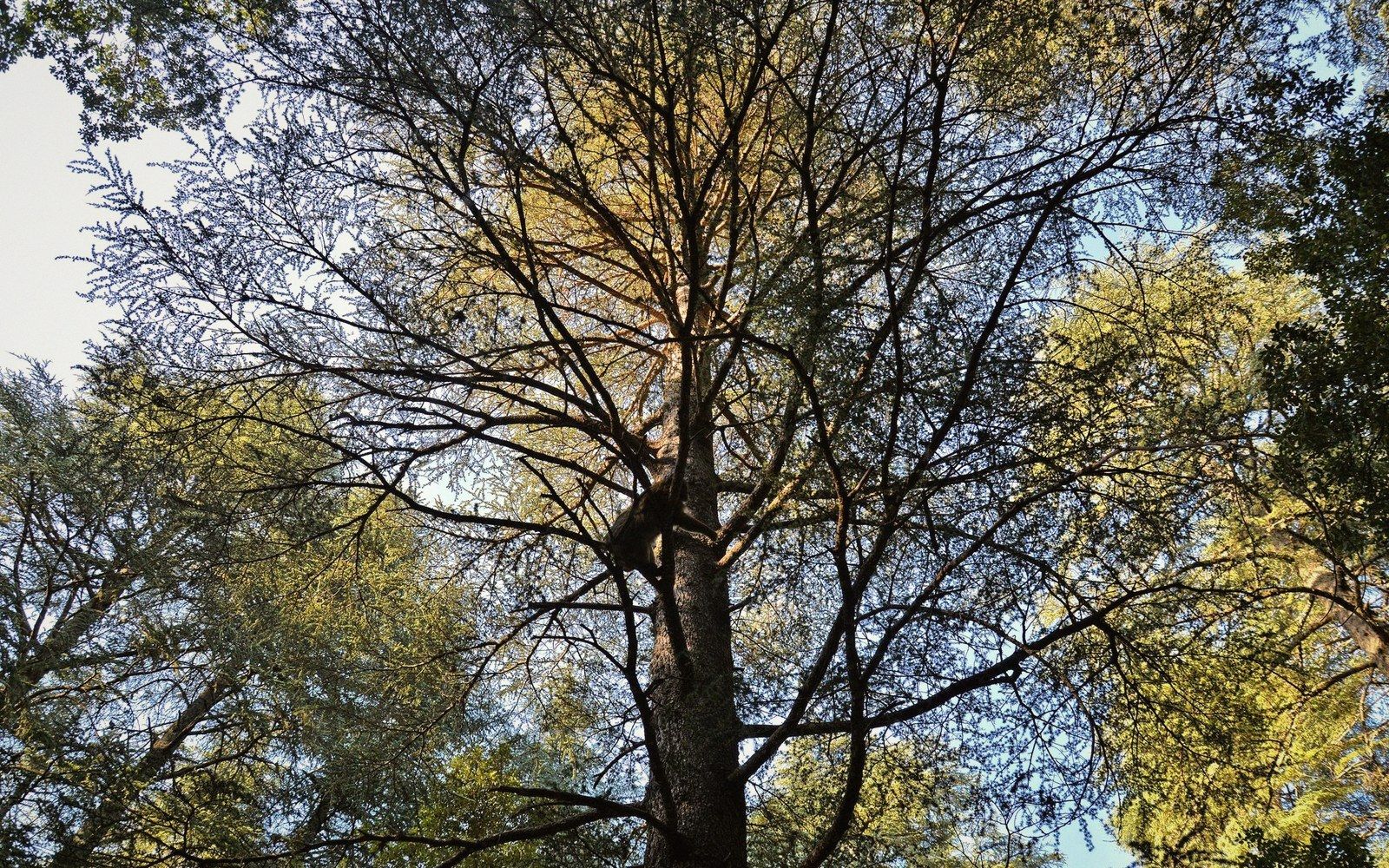
The cedars on the Petit Luberon plateau look ancient and inevitable. They are neither.
A Deliberate Forest
Drive up from Bonnieux toward the plateau and the landscape shifts in under a kilometre. The dry garrigue — the low scrub of kermes oak, rosemary and thyme that covers most of the massif's exposed limestone — gives way to something darker and taller. The cedars close over the road in an abrupt canopy, and the air cools perceptibly. It feels like entering a different country, because in a botanical sense you are.
The Atlas cedar (Cedrus atlantica) is a North African species, native to the mountains of Morocco and Algeria. The stand above Bonnieux was planted in the 1860s as part of a deliberate reforestation programme managed by the Waters and Forests administration — the French state agency responsible for reversing centuries of deforestation and erosion across the country's hillsides. The Luberon plateau had been heavily grazed and stripped for charcoal; the soils were thin and exhausted. The cedar was chosen partly for hardiness, partly because foresters of that period were experimenting with exotic species across Provence, and the Atlas cedar had already proved it could survive limestone and drought.
It worked almost too well. The trees have self-seeded and spread well beyond the original planted boundaries, occupying a substantial belt of the Petit Luberon plateau between Bonnieux and Lacoste and pushing into the garrigues on either side. Old aerial photographs show a sharper edge; the current forest is denser, younger at the margins, and still expanding slowly.
Walking into it in any season is disorienting in a way that feels earned. The floor is deep with rust-coloured needle-fall that muffles footsteps. Lichen beards the older branches. In fog — and the plateau carries fog long after the valley has cleared — the forest goes fully Nordic, the trees standing in white silence with their characteristic flat-topped crowns obscured. In high summer it is fifteen minutes of walking from the Bonnieux car park to a place that is genuinely cool.
There is no dramatic viewpoint inside the forest. That is the point. The Luberon has no shortage of panoramas, but this is a place that turns inward, and its foreignness — African trees on Provençal limestone, planted by a government programme, matured into something that now reads as natural — is exactly what makes it worth understanding rather than just passing through.
The cedar forest is not ancient. It is not indigenous. It is a product of nineteenth-century forestry policy that became, over a century and a half, one of the stranger and quieter beauties of the massif.
