The ochre canyon at Rustrel is the most visually striking short walk in the Luberon — and the crowds are part of what you have to think about.
Walking into Something That Looks Invented
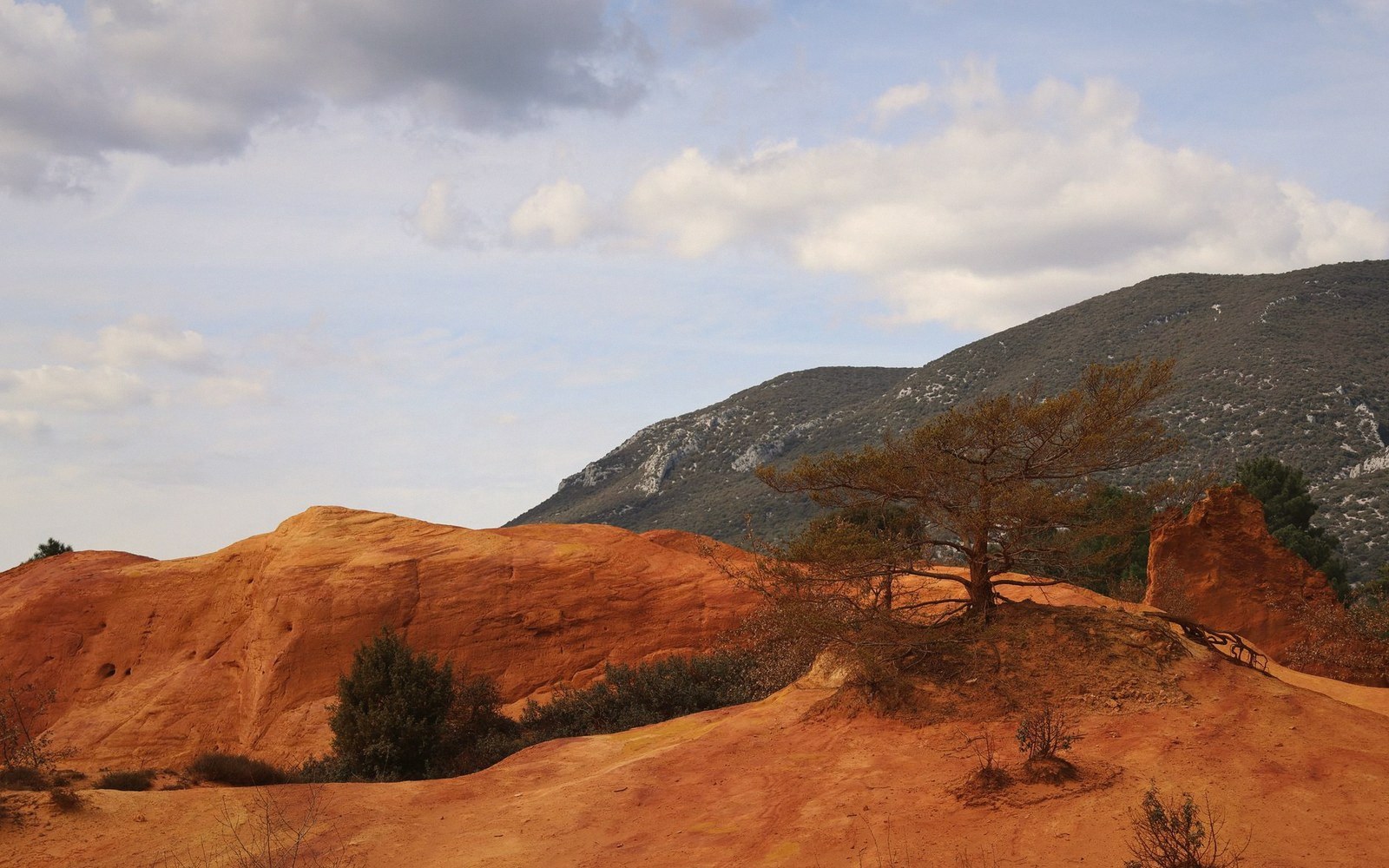
The Colorado Provençal sits above the village of Rustrel, on the north slope of the Petit Luberon, about eight kilometres east of Apt. The name is not modest, and the landscape earns it: eroded columns of ochre clay in saturated reds, oranges, and pale yellows, cut through by dry gullies and topped with wind-worked pinnacles called cheminées de fée — fairy chimneys — where a harder cap of sandstone has slowed the erosion beneath it. Standing at the first viewpoint, most people go quiet before they say anything, because the brain briefly insists the colour has been adjusted.
The extraction of ochre here ran industrially from the late nineteenth century until the 1950s, and what you are walking through is partly the remnant of that extraction — spoil heaps, cut faces, redirected drainage — and partly the natural weathering that has continued since the machinery left. The two are now inseparable, and that ambiguity is part of what makes the place interesting rather than merely photogenic.
The main circuit takes between an hour and two hours depending on the route chosen and how long you linger. There are two signed loops from the car park, a short one and a longer extension that climbs through pine and scrub oak to broader views before descending back into the canyon floor. Neither is strenuous; the terrain is sandy and loose underfoot in places, and the colour transfers — white trainers will not survive. Wear something that can be brushed off. The ground is slippery after rain, and the site closes during high fire-risk periods in summer, which is worth checking before you drive up.
The crowds are real. On a Saturday morning in July, the car park fills early and the canyon floor can feel like a queue with scenery. The practical response is to arrive before nine or after four, or to come in shoulder season — May and October give the best light anyway, lower sun angles deepening the red against blue sky. A weekday morning in April, the place can be almost empty, the pine shadow still cold, the colours shifting as the light moves. That version of the Colorado Provençal is worth the extra planning.
The site is managed with an entry contribution that funds path maintenance and erosion control. Staying on the marked paths is not a formality: the soft ochre walls genuinely erode faster where people cut corners, and some of the most dramatic features have been fenced off precisely because repeated foot traffic loosened them.