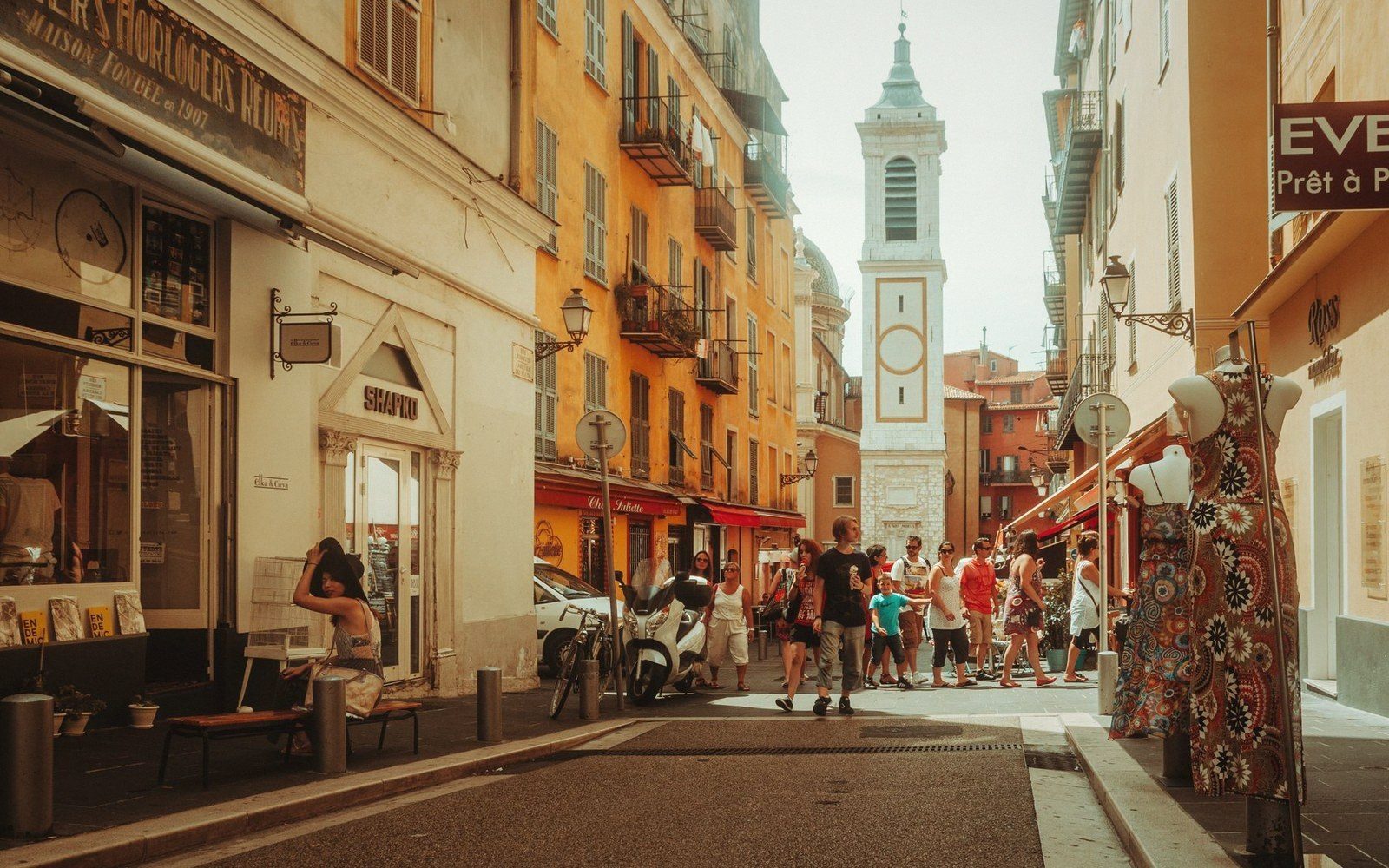
Each Luberon village has its day, and the rotation has been fixed for generations — not for visitors, but for the valley.
A Circuit Built Before Tourism
The weekly market rotation across the Luberon was not designed with visitors in mind. It evolved over generations to serve farmers, growers and tradespeople who could not be in two places at once. If a producer set up at one valley town on a given day, they needed the next market day free to travel to the next. The rotation is a labour-sharing arrangement that happens to be convenient for anyone who wants to eat well.
Every significant village and town in the Luberon has a designated market day, and almost none of them clash directly with their nearest neighbours. Apt, the most workaday of the lot, anchors the northern corridor — its market is the one serious commercial engine of the Calavon valley, where producers from a wide radius bring the real volume. Cavaillon, at the western end of the massif, has its own rhythm, tied as much to its role as a national wholesale hub for fruit and vegetables as to any local tradition. Lourmarin on the southern flank, Pertuis further east, Manosque beyond — each has staked out its day and held it.
The smaller perched villages take their cue from the larger towns. Their markets are lighter: a handful of stalls selling lavender products, a cheesemaker, a spit-roast van, a few tables of secondhand linen. They are worth attending not for provisioning but for atmosphere and for the moment when the village square, ordinarily contemplative, briefly becomes social.
What the Rotation Means in Practice
The practical consequence of the circuit is that a week in the Luberon, if timed properly, can yield a market almost every morning without retracing a route. The northern arc runs through the Calavon corridor. The southern arc follows the foot of the massif and the plain between the hills and the Durance. The perched villages — Bonnieux, Gordes, Ménerbes — slot in around the edges.
What changes with the seasons is not the day but the contents of the stalls. March brings the first asparagus from the irrigated plain and the year's new olive oil in unlabelled bottles. June fills the tables with stone fruit — the cherries, apricots and peaches grown in the orchards between the massif and the Durance that are unlike anything sold in a supermarket three days later. Autumn is the truffle season's overture: dried cèpes, first walnuts, and then, as November turns, the cautious early appearance of black truffle from the Vaucluse on the more serious tables in Apt.
Winter does not empty the markets. It compresses them and concentrates what matters: root vegetables, preserved meats, oil, wine, cheese. The stall count drops, the seasonal tourists are gone, and what remains is the transaction the markets were built for — local producer, local buyer, the week's provisions changed hands in a village square.
The one rhythm worth learning is this: the major valley markets serve provisioning; the village markets serve pleasure. Both are useful, but they reward different approaches. Arrive at Apt with a basket and a list. Arrive at Bonnieux or Ménerbes with no particular agenda and an hour to spare.
The circuit is easy to discover on arrival — any local épicerie (grocery shop) or mairie (town hall) will have a posted list, and the hotel or rental house will know it by heart. What matters is understanding the structure before you arrive: these markets rotate through the week not as an entertainment programme but as the valley's actual food supply system, and they have been doing it, in roughly this form, for a very long time.