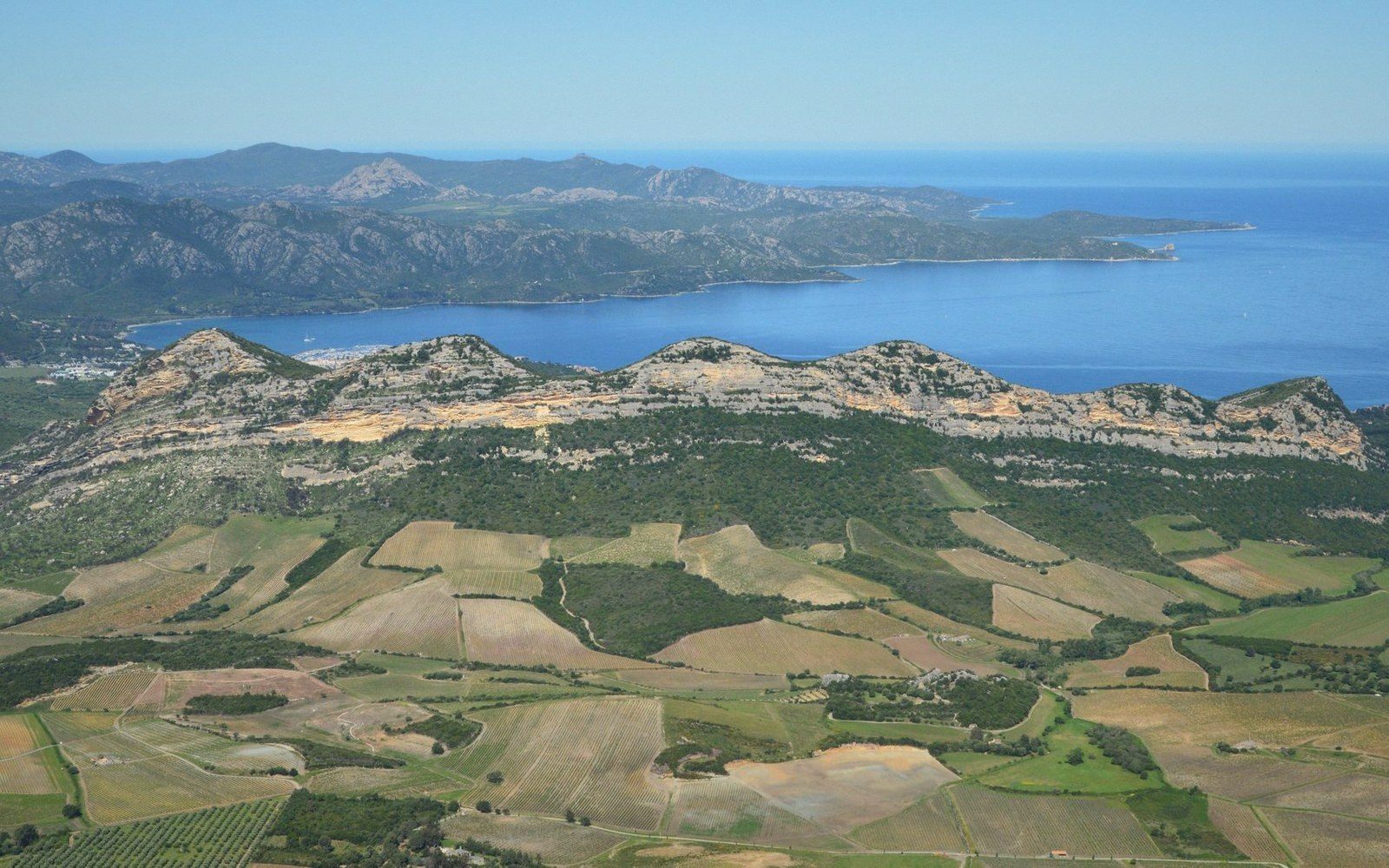
The Luberon AOC covers both flanks of the same ridge. The wines are not the same.
Aspect and Altitude Divide the Appellation
The Luberon massif runs roughly east–west, which means its two long flanks face in opposite directions — north toward the Calavon valley and south toward the Durance plain. That single geological fact is the most important thing you can know about Luberon wine, more useful than any label or vintage note.
The north-facing slopes rise from the Calavon corridor between Cavaillon and Apt. They catch morning light in summer but lose the afternoon sun early, and temperatures at harvest — which can run two or three weeks behind the south — stay cooler through the night. Vines here stress less in August, ripen more slowly, and hold onto their natural acidity. The result, particularly in whites and rosés, is a freshness that the south rarely matches: there is something a little nervy and mineral in the better north-flank bottles, a tension between fruit and acid that keeps them interesting in the glass. Reds from these slopes tend to be leaner, with better-defined tannin structure and red-fruit character rather than the jammy warmth that easier heat produces.
Cross the ridge — either through the Lourmarin combe or on the road over the Mourre Nègre flank — and the climate shifts noticeably. The southern flank is sheltered from the mistral (the cold, dry northwesterly that batters the Calavon side) and angled to absorb full afternoon sun off the Durance plain. Picking starts earlier. Grapes come in riper, sometimes very ripe, with more sugar converted to alcohol and softer acidity. Southern-flank reds in warm years can be plump and generous, pushing toward the richer register associated with Côtes du Rhône villages to the west: grenache in particular expands confidently under this exposure, and syrah takes on a meatier, more peppery character than its northern equivalent.
What the Difference Actually Produces
Neither side is simply better. The north flank has the edge in freshness and in the kind of white wine — usually vermentino, clairette, or grenache blanc — that you want cold on a hot evening without it tasting flat. The south flank produces the fuller reds that suit the season's cooking: slow-roasted lamb, a tian of summer vegetables, anything off a charcoal fire.
Rosé, which accounts for a substantial share of Luberon AOC production, shows the difference most starkly. Northern-flank rosé — pale, brisk, dry — has the structural similarity to Provençal styles from farther east. Southern-flank rosé tends to be a shade deeper in colour and rounder on the palate; drink it sooner rather than later, because the lower acid means it fades faster.
The division holds across elevations too, though it compresses. Vines planted high on either flank — where the limestone scrub gives way to garrigue and the gradient steepens — behave more like northern-flank vines regardless of which side they are on, because altitude reclaims the acidity that warmth removes. The lowest vineyards on the alluvial shelf approaching the Durance are emphatically southern in character, sometimes more so than the flank itself.
What the aspect difference does not fix is vintage variation. A cool, wet spring affects both flanks; a September heatwave compresses the advantage the north normally holds. But in an average year the structural difference between a bottle made from Calavon-side fruit and one from a Durance-facing slope is real enough to taste blind. It is the kind of distinction the Luberon does not advertise loudly enough — less glamorous than a single-village appellation, but honest, and grounded in the ridge you can see from either road.